Company Profile
Dorrenhaus is an expert in production of UL and CE certified door closer which stands for the highest standard you could find in China or even globally. Every single piece of our product is only released in the market after the most strict inspections starting from raw material to packaging details. Our ANSI/BHMA grade products are the most popular in the North America markets including mainly the USA and Canada.
Why Choose Us
01/
High Quality
The models with ANSI/BHMA certificates come with delay action functionality as option and meet ADA requirements. We have also CE certified products oriented for European markets which were manufactured according to EN1154 standard. All of our door closer products are non-handed.
02/
Advanced Equipment
Six complete production lines with annual output of 1.5 to 2.0 million sets.Two complete door closer assembling lines, max. 12,000pcs per day.
03/
Certificate
Passed European & China ISO9001:2015 QMS Certification.
04/
Professional Team
Every single piece of our product is only released in the market after the most strict inspections starting from raw material to packaging details. Our ANSI/BHMA grade products are the most popular in the North America markets including mainly the USA and Canada.
-

Cam Action Concealed Door Closer
Place of Origin:Zhejiang, China. Brand Name:DORHAUS, Dorrenhaus. Certification:ISO9001:2015. Model Number:D70. Minimum Order Quantity:200 pieces. Packaging Details:1 piece in 1 paper box, 10 pieces Add to Inquiry -
Hidden Door Closer
Place of Origin:Zhejiang, China. Brand Name:Dorrenhaus, DORHAUS. Certification:ISO9001:2015. Model Number:D20. Minimum Order Quantity:500 sets. Packaging Details:1set in 1 paper box, 10sets in carton Add to Inquiry -
Concealed Overhead Door Closer
Place of Origin:Zhejiang, China. Brand Name:Dorrenhaus, DORHAUS. Certification:ISO9001:2015. Model Number:D30S. Minimum Order Quantity:500 sets. Packaging Details:1set in 1 paper box, 10sets in Add to Inquiry -
Medium Duty Concealed Door Closer
Place of Origin:Zhejiang, China. Brand Name:DORHAUS, Dorrenhaus. Certification:UL 228, ISO9001:2015. Model Number:D30. Minimum Order Quantity:500 pieces. Packaging Details:1 piece in 1 paper box, 10 Add to Inquiry


What Is A Concealed Door Closer
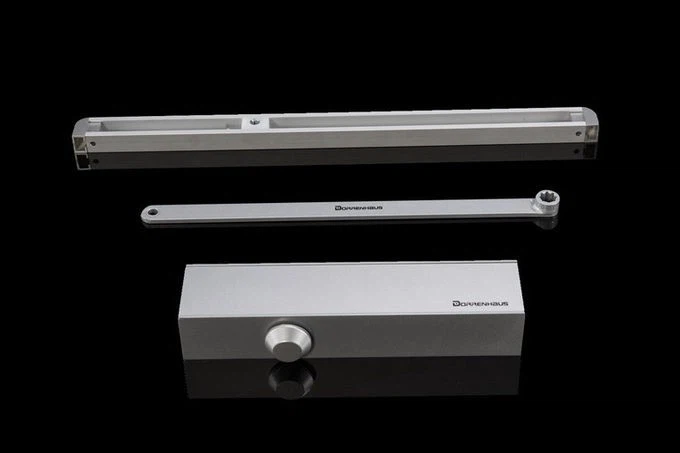
A concealed door closer is a spring and hydraulic closing device that is mounted overhead in the frame's transom or under the floor. Many people new to the door hardware industry often call these closers, "hidden door closers". In this guide we explain what exactly a concealed door closer is and how to identify one.
The concealed door closer design concept was initially engineered as a self-contained product that featured a center pivot allowing a variety of door functions with no exterior arm or visible operating hardware. Other types of concealed door closers have the closer mounted into either the header or floor area of a door with observable arms that either exert the force of the closer on the door or limit the door swing travel. Subsequent development of the concealed closer has led to specifically functioned products that required advance knowledge of door swing, handing, and degree of opening prior to purchase and installation.
Benefits of concealed door closer
Ensures fire doors are closed
Fire doors need to be kept completely closed at all times. Doors with a fire-rating allow you to exit the property safely while keeping the smoke and fire at bay. If there is no door closer, or the door closer is not closing completely, then the fire protection mechanism is compromised. A fire door that doesn’t latch completely can lead to an unsafe passageway or stairwell, and loss of life and damage to property in the event of a fire.
Prevents the slamming of doors
The mechanism of concealed door closer ensures a controlled closure of the door. The damper feature keeps the force and speed of the door closure at a certain level. This is important when it comes to heavy doors and people who are vulnerable to injury.
Anyone who can’t move quickly enough can experience the pain of pinched fingers. People with heavy cargo, like multiple bags, can also benefit from concealed door closer.
Controls the open swing of doors
Most concealed door closer also come with a backcheck function. Backcheck prevents doors from opening too fast, by either slowing or even stopping the door at some point of its opening swing.
Adds security through door closure
A door closer adds another level of security to a property. Since it securely closes a door after someone passes through it, your door won’t be left open for unwanted persons. You won’t have to worry about leaving the premises open for the taking to thieves or unauthorised persons.
Type of Concealed Door Closer
Overhead Door Closers
The overhead door closers are the most common of all and are widely used in commercial properties. For instance, conference doors, office interior doors are generally affixed with a closer which would automatically close the door. The three most common types of overhead door closers are –
Floor-Spring Door Closers
The Floor-spring door closers are generally used on glass doors and are mounted on the floor so that it remains concealed. A bar in the closer is fitted on the underside of the door that controls the closing action. These are mostly used for upscale commercial properties as they have the most appealing looks. They also have an open setting so that they can be left open.
Transom-Mounted Overhead Door Closers
Like standard arm door closers, the arms project out from the door rather than sitting flat. The main difference is that the spring-loaded box is mounted on the door frame. The most common application is to aluminium or glass doors, mainly because these doors often have narrow top rails.
Application of Concealed Door Closer


Fire Door Safety and Compliance
Fire doors form an integral part of the fire compartmentation of a building and must be closed in the event of an outbreak of fire. concealed door closer ensures that the door will close automatically after it has been opened. A floor spring, transom, concealed or overhead closer could be installed to a fire door if it has the correct certification. If hold open function is required on a fire door, install either an electromagnetic door closer or an electromagnetic door holder.
Controlled Closing
Most closers feature dampers that offer a level of control over the force and speed at which the door closes. This cushion is especially crucial on particularly heavy doors. Correctly adjusting the closure speed can prevent an injury to a child or a less able person; in fact, anyone who is unable to move quickly, even someone burdened with heavy shopping for example.
Secure Closing
concealed door closer will ensure that your entrance door has closed securely after someone passes through it. This prevents your property from being left vulnerable to thieves or preventing unauthorised access etc. Fitting the correct door closer is especially important on doors fitted with access control. concealed door closer will ensure that the door returns to the closed position after opening, allowing the locking element to engage and secure the door. Doors using maglocks, electric strikes, or electric locks would all require a controlled door closing device to be fitted to provide secure closing.
Preventing Damage
Most closers have backcheck function which prevents the door from being opened too fast. This can happen on external doors during high winds etc. when the door could blow open at high speed. The door blowing open at high speed, or being vigorously thrown open could damage either the door or the doorframe itself, which is costly.
When Do You Need To Replace A Concealed Door Closer
As with anything mechanical, there will come a time when you will need to replace your concealed door closer. Here are some examples of when you should consider installing a new unit, or replacing a component part:
The door is no longer closing fully and adjustment has not solved the issue. The purpose of the closer is to ensure that a door shuts fully into the frame in order to maintain fire integrity and/or security.
If the door is slamming it is possible that the hydraulic fluid or oil has leaked out or the valve seals are worn. If adjustment doesn't work then it's time to replace.
If you notice hydraulic fluid leaking. Without this essential fluid, the concealed door closer will fail and this could happen at the point that you need it the most.
To keep your fire door closed fully into the frame, against any lock or latch fitted, thereby keeping smoke and fire at bay due to the tight seal between the door and the intumescent, and allowing you to exit the premises safely.
To prevent any unauthorised person gaining access to your property/premises either when you are there or in your absence.


Concealed Door Closer Installation
Choose a location
Carefully determine where you plan to install the shutter. When closing the door, ensure enough space for your arm to rest on the opposite wall. Mark the hole you plan to drill with a pencil
Test and adjust
After finishing the installation, let’s test if the door is closed.
Open the door, and then release the washing machine. Remember, we have preloaded it. If your concealed door closer includes a spring-loaded quick-release washer, it willautomatically remove when you open the door.
Adjust the tension
If your door does not close, or the speed is too fast or too slow, you can adjust the tension on the concealed door closer.
There is a tension screw on the front of the concealed door closer. Turn the screw counterclockwise about the door faster or harder. Turn the screw clock wisely; the slower it turns off.
Gather your tools
The necessary tools may include a tape measure, hole punch, pencil, screwdriver, monkey wrench, and drill bit. To
Adjust the dial screw
This is only necessary when trying to open the door holding the device. Adjust the adjusting screw to the desired fixed position.
Close to installation
With holes marked, use a drill to create holes for the screws. Reposition the shutter and tighten it.
Put on the arm
Install the separate components, then connect the two parts and the preloaded spring. Tighten the included screws. To
How to Adjust The Concealed Door Closer?
If you are opening the door or opening too fast or too slowly, it may be time to adjust the door’s distance. Just the proper steps and a little time.
Strength adjustment method
There are many ways to adjust the concealed door closer, and different models differ. Some are simple and complex. When revising, we must perform specific operations according to the purpose of the adjustment.
For example, we need to adjust the door's power closer because improper power may cause a lot of noise when closing the door. The specific method is this: first, find the screw corresponding to the adjustment force and then adjust it with a screwdriver.
Generally, tighten it to reduce the closing force and relax it to increase the closing pressure. So, choose according to the size of your own home. If the size is small, you must tighten it. If the door is too heavy or oversized, it should be loose. Try a few more times to find the feeling.
Speed adjustment method
The purpose of the second type of adjustment is speed. The adjustment of the rate is similar to that of strength. If the force is greater, the speed will be faster; if the power is small, the speed will be slow.
However, some concealed door closers have special speed-adjusting screws. In this case, they must be adjusted with screws controlling the force. You must first change the door's power closer, then find the screw to adjust the speed and rotate it according to the instructions.
How to Maintain a Door Closer
Since door closers are made out of metal, they can be maintained very similarly to the way you'd maintain any other metal tools and contraptions. However, there are a few
tricks to prevent them from slowing down or rusting out. To prevent any issues, try the following suggestions:
●Keep the door closer oiled
●Never force the door to close. Opening a door with a closer on it will be a little bit more difficult, but not enough to hinder you. lf you're feeling impatient, just let it close when you're done with it. Forcing a door to close can make the door closer break. lt puts too much stress on the parts that are designed to prevent it from slamming.
●Door closers usually last about seven years. If you're pushing it beyond that point,it's safe to say that you'll experience problems. All parts have unique life expectancies, but you shouldn't try to overwork a door closer since it might break and cause harm.

Our Factory
Dorrenhaus is an expert in production of UL and CE certified door closer which stands for the highest standard you could find in China or even globally. Every single piece of our product is only released in the market after the most strict inspections starting from raw material to packaging details.


Certificate


FAQ
We're professional concealed door closer manufacturers and suppliers in China, specialized in providing the best customized service. We warmly welcome you to buy concealed door closer made in China here from our factory.
