Company Profile
Dorrenhaus is an expert in production of UL and CE certified door closer which stands for the highest standard you could find in China or even globally. Every single piece of our product is only released in the market after the most strict inspections starting from raw material to packaging details. Our ANSI/BHMA grade products are the most popular in the North America markets including mainly the USA and Canada.
Why Choose Us
01/
High Quality
The models with ANSI/BHMA certificates come with delay action functionality as option and meet ADA requirements. We have also CE certified products oriented for European markets which were manufactured according to EN1154 standard. All of our door closer products are non-handed.
02/
Advanced Equipment
Six complete production lines with annual output of 1.5 to 2.0 million sets.Two complete door closer assembling lines, max. 12,000pcs per day.
03/
Certificate
Passed European & China ISO9001:2015 QMS Certification.
04/
Professional Team
Every single piece of our product is only released in the market after the most strict inspections starting from raw material to packaging details. Our ANSI/BHMA grade products are the most popular in the North America markets including mainly the USA and Canada.
-

Certifire Sliding Door Closer
Place of Origin:Zhejiang, China. Brand Name:Dorrenhaus, Dorhaus. Certification:EN1154, ISO9001:2015. Model Number:D2004H, D2005H. Minimum Order Quantity:500pcs. Packaging Details:1 pc in 1 paper box, Add to Inquiry -
Slide Track Door Closer
Place of Origin:China. Brand Name:DORHAUS, Dorrenhaus. Certification:ISO9001:2015. Model Number:D303SH. Minimum Order Quantity:500 sets. Packaging Details:1set in 1 paper box, 20sets in carton of Add to Inquiry -
Slide Channel Door Closer
Place of Origin:China. Brand Name:DORHAUS, Dorrenhaus. Certification:ISO9001:2015. Model Number:D904H. Minimum Order Quantity:500pcs. Packaging Details:1pc in 1 paper box, 10pcs in 1 carton, 48ctns Add to Inquiry -
Heavy Duty Sliding Door Closer
Place of Origin:China. Brand Name:Dorrenhaus, Dorhaus. Certification:ISO9001:2015. Model Number:D3036H. Minimum Order Quantity:300 pcs. Packaging Details:1pc in 1 paper box, 6pcs in 1 carton of Add to Inquiry -
Adjustable Sliding Door Closer
Place of Origin:Zhejiang, China. Brand Name:Dorrenhaus, DORHAUS. Certification:ISO9001:2015. Model Number:D8016H. Minimum Order Quantity:500 sets. Packaging Details:1set in 1 paper box, 6sets in 1 Add to Inquiry -
Adjustable Slide Channel Door Closer
Place of Origin:Zhejiang, China. Brand Name:Dorrenhaus, Dorhaus. Certification:EN1154, ISO9001:2015. Model Number:D2025H, D2024H. Minimum Order Quantity:500 pcs. Packaging Details:1pc in 1 paper box, Add to Inquiry


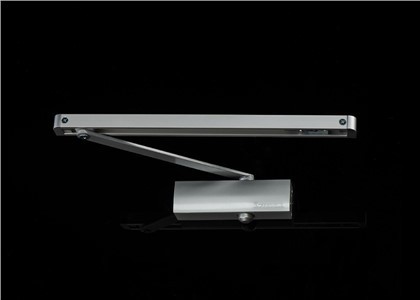


Benefits of Sliding Door Closer
Convenience
A door closer is a mechanical device that helps to close doors automatically. This allows you to control how quickly or slowly a door closes after someone enters or exits the doorway. It also helps to prevent doors from being left open for unauthorized persons to access the premises.
Normally installed on fire-rated doors, these devices help to contain and delay the spread of fire throughout a building. They can also help to keep a room or space at the desired temperature without having to constantly prop open doors and let the air flow out.
Energy Efficiency
A door that is left open too long allows conditioned air to escape, which will drive up energy costs. Door closers help keep doors closed and maintain a stable temperature, which will lower business energy bills.
A well-functioning door closer will not only help keep your property safe, but it will also protect it from damage. Slamming doors can rip off the frame, hinges, and adjacent walls, as well as cause injury to anyone who is caught in the way. A door closer will prevent the slamming of doors and ensure that they shut completely.
Security
Door closers are important for ensuring that doors do not remain open to unwanted persons. They can also be useful for preventing fires from spreading as they close doors behind occupants as they exit a building. They prevent the flow of air that can fuel a fire and can help reduce energy bills by keeping doors closed longer.
A door closer is a mechanical hydraulic device that controls the speed and motion of a door’s closing operation. They are commonly used on commercial and industrial doors for convenience, but they can be installed on residential doors as well to provide Security lock service.
Type of Sliding Door Closer




Air-Based Door Closers
These door closers usually have a cylindrical shape with a piston on the inside. When the door opens, the piston is pulled back and forced to expel the air within the cylinder slowly, before the door can fully shut again. An adjustable screw allows you to control how quickly the air is expelled, causing the door to shut quicker or slower.
Fluid-Based Door Closers
Fluid-based door closers use hydraulic fluid or lightweight oil to control the close of the door. These models tend to have stronger springs that can handle more weight and offer a more smooth close due to increased control.
Pot Belly Door Closers
These are newer models that operate with an adjustable clock coil spring to provide smaller incremental increases or decreases that can meet exact power requirements. As their name suggests, they are more pot-shaped than cylindrical.
How do Sliding Door Closer Work?
Sliding Door Closer work by using a hydraulic mechanism to control the speed and force at which a door closes. When the door is opened, the hydraulic fluid is forced through a small valve, which slows down the closing speed of the door. This helps to prevent the door from slamming shut and causing damage or injury. Sliding Door Closer are important for safety reasons, as they ensure that doors close properly and prevent unauthorized access to buildings or rooms. They also help to regulate temperature and airflow within a building, which can improve energy efficiency and reduce heating and cooling costs.
There are several types of Sliding Door Closer, including surface-mounted, concealed, and floor-spring models. Surface-mounted Sliding Door Closer are the most common and are attached to the surface of the door and frame. Concealed Sliding Door Closer are hidden within the door and frame, providing a more streamlined appearance. Floor-spring Sliding Door Closer are installed in the floor and are often used in commercial settings. Regardless of the type of door closer, they all work by using hydraulic pressure to control the speed and force of the door’s movement.
How to Adjust a Door Closer
If you're noticing that your door isn't closing properly, or if it's making noise when it does close, then it's time to adjust your door closer. This is a simple process that anyone can do, and it only takes a few minutes. In this article, we'll show you how to adjust a door closer in six easy steps.
Remove the Cover
Removing the cover of a door closer can be one of the first steps in adjusting it to your desired preferences. Depending on the type of closer you have, you may need a screwdriver or other tool to remove the cover. Cylindrical closers are usually held in place with head screws, while other types of closers may only require you to push the cover away from its housing.
It is important to take note of any screws or components inside before taking off the cover so that they can easily be put back in the right places when replacing it. After you remove the cover and take note of any internal elements, you can proceed with making adjustments according to your preferences, safe in the knowledge that you will know how to replace everything properly afterwards.
Close all of the Valves
Start with the sweep valve since it affects how quickly or slowly the door closes and incrementally adjusts from there. Begin by closing all of the valves on the door closer before turning any other knobs. This ensures that no excess pressure goes into the system and will prevent any damage to the parts. You can also use a lubricant to help maintain the smooth operation of your door closer for years to come.
Adjust the Backcheck
The backcheck is a feature installed on all Sliding Door Closer to prevent the door from opening too quickly and hurting people in the process. To adjust the backcheck, loosen the set screw located at the top of the arm connecting to the wall. Use a flathead screwdriver, so you don't damage any other parts of your door closer.
Adjust the Sweep/Main Speed
You must adjust the sweep speed/main speed of the closer to determine how fast or slow the door will move when closing. This can be done easily by turning the helical screw that's located on top of your closer body. If you turn it clockwise, it will increase the swing speed, and if you turn it counter-clockwise, it will make it slower.
Adjust the Latching Speed
In order to adjust the latching speed of your door closer, it is important to consult with the manufacturer's instructions first and foremost. Many times, the instruction manual will have detailed steps regarding how this process should be handled based on the make and model of your particular door closer.
Test the door
Testing your door is important when adjusting the door closer. Start by closing the door manually, watching how the closer arm interacts with the track. This can help you determine if any tensions might need to be adjusted and also check how much closer pressure is needed for secure closure.
How to Install an Sliding Door Closer
Step 1: Identify the door-swing direction
There are a few different ways to install an Sliding Door Closer, and you want to ensure you’re installing yours correctly. First, you need to identify the swing of the door, which you can do by standing in the door jamb with the door open and your back to the hinges. If the door is on the right, it’s a right-hand-swing door. If the door is on the left, it’s a left-hand-swing door.
Step 2: Mark the drilling locations
If your kit contains a template, there may be options for left- and right-hand doors. Find the template the fits the door, cut it out with a utility knife, and tape it to the door according to the directions.
Using your pencil, mark the distance of each set of holes from the hinge. Placing the speed square against the top of the door, mark a vertical line at both pencil marks. Use your tape measure or the rule on the square to mark the height of each of the holes on these vertical pencil lines.
Step 3: Drill the holes
Throw on some safety glasses, and if you’re drilling through a metal door, gloves are helpful as well. Using a power drill with a smaller drill bit in place, drill your pilot holes on the marks you just made before stepping up to the appropriate bit (usually 3/16, but check the instructions). Don’t drill all the way through the door; a depth of ¾ inch is typically enough.
Step 4: Install the door closer body
Most door hardware of any type uses #3 Phillips bits, so tighten one into your drill for this step. Using the screws that came in the kit, attach the door closer to the door according to the directions. Be sure to pay attention to the instructions so you’ll know which way is up when you’re installing the door closer.
Step 5: Install the swingarm bracket
With the #3 Phillips bit still in the drill, use the included hardware to attach the swingarm’s bracket to the door jamb. It’s sometimes easier to separate the arm from the closer for this part, as one of the holes can be very difficult to reach with tension on the closer.
Step 6: Attach the swingarm to the closer and adjust it
If you removed the swingarm from the closer, it’s time to reattach and adjust it to close correctly. Check the directions that came in the kit, but this often means loosening the set screw on the arm and adjusting it so that the jamb side of the swingarm is perpendicular to the jamb.

MAINTENANCE OF Sliding Door Closer
As with any mechanical device, sliding door closer require regular maintenance and even replacement to get the most out of it. Try making adjustments when you notice the following problems with your door closer, sometimes a simple adjustment can keep the sliding door closer working.
"When the door fails to close completely - properly adjust the valve on the sliding door closer, if the adjustment still does not close the door properly, it's time to get a new sliding door closer!
When the door slams shut - it may be locking the door too fast, again adjust the valve, if it turns out that the hydraulic fluid is leaking, this fluid is what makes the door closer work properly, so even a slight leak will make the door fail, sorry, you need to get a new closer.
If the sliding door closer has no spring tension, the spring is broken and needs to be replaced.
When a door closer no longer works, it fails to fulfill its purpose of protecting you, your property and its users. You need to maintain the sliding door closer and the system. If the problem cannot be solved by adjustment, it is best to remove and replace it."
Our Factory
Dorrenhaus is an expert in production of UL and CE certified door closer which stands for the highest standard you could find in China or even globally. Every single piece of our product is only released in the market after the most strict inspections starting from raw material to packaging details.


Certificate


FAQ
We're professional sliding door closer manufacturers and suppliers in China, specialized in providing the best customized service. We warmly welcome you to buy sliding door closer made in China here from our factory.
