-

American Light Duty Door Closer
Hand of door: Non handed. Materials of Body: Die-cast Aluminum. Max Door Width: 1500mm. Add to Inquiry -
High Temperature Hydraulic Door Closer
Arm Type: Fixed or Detachable. Mechanism Type: Rack&Pinion. Hand of door: Non handed Add to Inquiry -
Commercial Heavy Door Closer
Place of Origin:Zhejiang, China. Brand Name:Dorrenhaus, DORHAUS. Certification:ANSI/BHMA A154.6 Grade 1, UL228. Model Number:D8016. Minimum Order Quantity:500 pcs. Packaging Details:1pc in 1 paper Add to Inquiry -
Commercial Extra Heavy Door Closer
Place of Origin:Zhejiang, China. Brand Name:Dorrenhaus, DORHAUS. Certification:ANSI/BHMA A154.6 Grade 1, UL 10C. Model Number:D9016. Minimum Order Quantity:500 sets. Packaging Details:1set in 1 paper Add to Inquiry -
Overhead Commercial Medium Door Closer
Place of Origin:Zhejiang, China. Brand Name:Dorrenhaus, DORHAUS. Certification:ANSI/BHMA A156.4 Grade 1, UL 228. Model Number:D4016. Minimum Order Quantity:500 sets. Packaging Details:1 set in 1 Add to Inquiry -
Certifire Interior Door Closer
Place of Origin:Zhejiang, China. Brand Name:Dorrenhaus, DORHAUS. Certification:UL 228, ISO9001:2015. Model Number:D503. Minimum Order Quantity:500 sets. Packaging Details:1 set in 1 paper box, 10 Add to Inquiry -
UL Listed Light Duty Door Closer
Place of Origin:Zhejiang, China. Brand Name:Dorrenhaus, DORHAUS. Certification:UL228, ISO9001:2015. Model Number:D303S. Minimum Order Quantity:500 pcs. Packaging Details:1pc in 1 paper box, 20pcs in Add to Inquiry -
UL Listed Residential Door Closer
Place of Origin:Zhejiang, China. Brand Name:Dorrenhaus, DORHAUS. Certification:UL 228, CCC Certified. Model Number:D703, D706. Minimum Order Quantity:500sets. Packaging Details:1 set in 1 paper box, Add to Inquiry


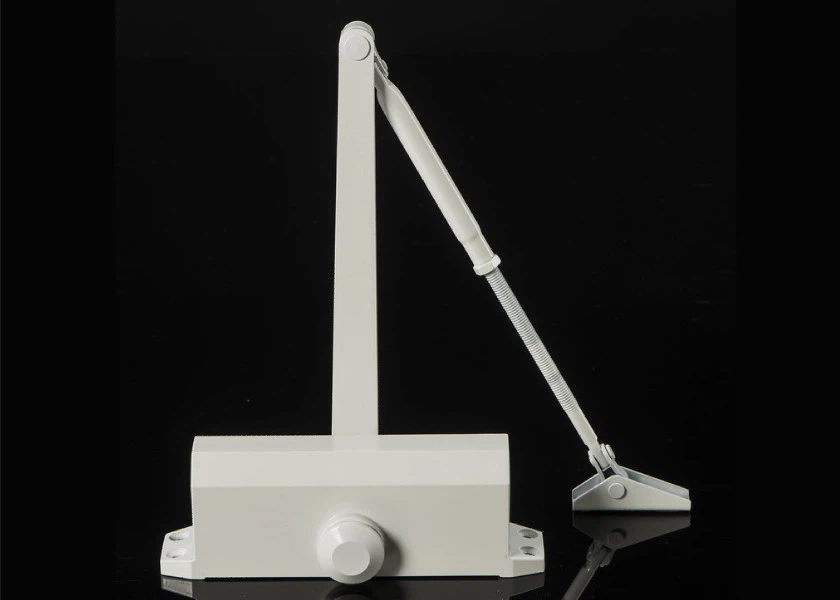
What Is UL Door Closer
UL Door Closer is a mechanical device fitted to a door in order to control the closing process. It consists of a hydraulic mechanism installed directly on the door frame or the door leaf. When the door is opened, the included spring inside the UL Door Closer stores essential energy. Afterwards, the energy is released, thereby automatically closing the door.
This is convenient when permitting access by groups, people with disabilities or individuals with mobility issues, or when moving bulky items into or out of a building. In principle, UL door closer with a hold-open function are not suitable to be installed on fire doors or smoke protection doors – this is because the door needs to be held shut to create a barrier and prevent the spread of fire and smoke.
Benefits of UL Door Closer
Fortifying the First Line of Defense
The front line of any kind of building's protection is its doors, and the performance of a door lock is extremely important in strengthening this line of protection.UL door closer go through extensive screening to guarantee they meet rigorous security and safety requirements. These examinations examine resistance to
selecting,drilling, prying, and other tampering techniques, guaranteeing that the lock can withstand unapproved access attempts.
Controlling Access and Enhancing Safety
UL door closer for their ability to sustain repeated opening and closing cycles, replicating real-world use circumstances. This screening assures that the door better can withstand the wear and tear it will certainly experience throughout its operational life.Additionally, door closers are assessed for their ability to operate in
various environmental problems, making certain reputable performance regardless of temperature, humidity, or various other exterior elements.
Completing the Security Ecosystem
Hinges, for example, undergo testing that assesses their capacity to endure repetitive opening and closing cycles,along with their resistance to forces that might try to break or harm them. UL door closer deals with and departure devices are looked at for their reliability in emergency situation situations, making certain that owners can quickly and
conveniently leave the structure when required.
The Importance of UL-Certified Door Closers
UL door closer (Underwriters Laboratories) is a globally recognized organization that sets safety standards and conducts rigorous testing to ensure products meet those standards. When it comes to door closers, UL certification signifies that a product has undergone extensive testing for safety, durability, and performance.
Type of UL Door Closer
Hydraulic door closer
Hydraulic door closers generally refer to door closers. The door closer is a spring-like hydraulic device on the door head. When the door is opened, it can be compressed and released to close it automatically. It acts like a spring door and can ensure it is opened accurately and timely to the initial position.
Overhead door closers
You will usually find these door closers inside the office or front door.
However, if you do not have many visits throughout the day, you can use elevated doors at your business’s front door. This type of door closer is suitable for buildings with heavy traffic.
Chain door closer
This door closer uses a spring installed in the hinge and is an integral part of its design. The spring can be visible or hidden in the tube and is more common in interior doors.
They are called double-acting spring hinges on doors that open in both directions. The self-closing hinge looks like spring but works like a closed door. It solves the gap problem and provides speed control in one component.
Concealed door closer
Concealed fire door closers provide overhead door closers’ function but are installed in the door leaf and frame. This installation is aesthetically pleasing and helps reduce vandalism, as most door closers are invisible.
They are available in spring or hydraulic versions on the market, and due to their lightweight, they are usually used for interior doors.
Electric door closer
Electric door closers are also called automatic doors, electric releases, etc. It is a mechanism that realizes the automatic closing of the door leaf through electric control. Electric door closers are different from hydraulic fire door closers.
Application of UL Door Closer
UL Door Closer, we have written about these before, but we get so many inquires about so and so number Listed Door Closer I thought it might be a good time to revisit it.
These standards are based on probable hazards associated with the product. UL Door Closer vigorously tests a sample of the product to determine how it reacts in each hazardous situation. If the manufacturer has proven it can create products that meet UL’s stringent safety requirements, it gets approved to carry the UL Door Closer Listed mark.
Consumers, contractors and builders subsequently look to Underwriters Laboratories fire ratings when purchasing and using building materials. UL Door Closer fire ratings for exterior walls and interior surfaces indicate which materials in a variety of categories are fire-resistant to a degree that agrees with National Fire Protection Association codes and standards as well as local building and fire codes.
Central to the matter of UL fire ratings, building codes and fire codes is the safety of a building’s inhabitants and inhabitants of nearby edifices.
UL Door Closer fire ratings for walls also help to indicate what architectural features and materials to use in conjunction with fire-rated walls, such as doors. Ratings enable builders to install doors and windows with compatible UL fire ratings. Manufacturers disclose such ratings in product descriptions, and products bear a UL-rated or UL-certified sticker that indicates all relevant information to the builder, contractor or consumer.
Installing a UL Door Closer
Once you've gathered all of the tools that you need, it's time to start installing your UL door closer. Make sure that you have plenty of working space, and don't forget to clear off shelves and counters nearby. Dust will undoubtedly fall all over the place, coating anything near your working space. Here are the steps to install a door closer:
01/
Unpack your door closer and lay all of the parts on a flat surface
02/
Grab the template and line it up with wherever you want it to be on the door
03/
Line the UL door closer up against the outline and mark the holes with a marker,pen, or pencil. This step is crucial, so ask for help if you have to. Even one hole out of alignment can sacrifice the integrity of your door closer. It'll break sooner than it should, or you'll be left with a pointless hole in the door.
04/
(Optional) Use the center punch to mark your holes wherever you've put the dots with your marking pencil. This will create guidelines for you to start the pilot holes in the next step, but it also creates a pathway for your drill. If you're used to wood and metalwork, then you already know the benefits.
05/
Using one of the drill bits mentioned above (3.5mm for wood, 5.1mm for metal),drill pilot holes on each marked point. Make sure that you feather or pulse the drill to prevent too much debris from coming out. Try to figure out what the inner material of your door is made out of.
06/
Brush off excess debris with a rag to clear your workspace. lf you leave it behind,the debris can get caught in your screws and loosen the hold. Also, it can trap moisture, which leads to corrosion and rust. If you're worried, you can use rust-proof spray on the holes prior to inserting the screws.
07/
Line up the UL door closer with the holes and drill the screws through each hole.Make sure you don't drill them too tight, or you could strip a screw. Try to drill each screw about 50% of the way to ensure that every point is screwed in place. After that, you can go back to each one and tighten it all the way.
08/
Test your installation by removing all of your tools and letting the door close on its own. If you're content with the speed that it closes, then you're all done.
Components of a UL door closer


A UL door closer is a mechanical device that is installed on a door to control its opening and closing. It consists of various components that work together to ensure smooth and controlled movement of the door. Some of the key components of a UL door closer include:
Body: The body of the UL door closer is the main housing that contains all the internal components. It is typically made of durable materials such as aluminum or steel to withstand the forces exerted on the door.
Arm: The arm of the UL door closer is responsible for connecting the body to the door. There are different types of arms available, such as regular arm, parallel arm, and top jamb arm, each designed for specific installation requirements.
Piston: The piston is the heart of the UL door closer and is responsible for controlling the speed and force of the door’s movement. It consists of a hydraulic mechanism that regulates the flow of oil or air, allowing for smooth and controlled closing of the door.
Spring: The spring in the UL door closer helps to counterbalance the weight of the door, making it easier to open and close. It also assists in regulating the speed and force of the door’s movement.
Valves: The valves in the UL door closer control the flow of oil or air within the piston, allowing for adjustable closing and latching speeds. These valves can be adjusted to meet specific requirements and preferences.
Mounting Plate: The mounting plate is used to attach the UL door closer to the door and the door frame. It provides stability and ensures the proper alignment of the UL door closer for optimal functionality.
Adjustment Screws: The UL door closer is equipped with various adjustment screws that allow for fine-tuning of the door’s closing and latching speeds. These screws can be turned to increase or decrease the speed and force of the door.
How to Maintain Your UL door closer
Regular Inspection: The first step in maintaining your UL door closer is to conduct regular inspections.Check for any visible signs of wear and tear, such as rust, loose screws, or damaged components. If you notice any issues during the inspection, address them promptly to prevent further damage.
Lubrication: Proper lubrication is essential for the smooth operation of your UL door closer. Over time,friction and constant movement can lead to increased wear on the closer's components. Apply a high-quality, silicone-based lubricant to hinges, arms, and other moving parts to reduce friction and prevent premature wear.
Adjustment and Tension Setting: UL door closers are designed to exert a specific amount of force to close a door properly. Periodically check and adjust the tension settings to ensure that the door closes smoothly without slamming or leaving gaps. Refer to the manufacturer's instructions for guidance on adjusting the closer's settings.
Weather Sealing: Weather conditions can impact the performance of your UL door closer. Inspect the seals and gaskets for any signs of deterioration, as exposure to the elements can cause them to crack or lose their effectiveness. Replace damaged seals promptly to maintain proper insulation and weather resistance.
Door Alignment: Misaligned doors can put unnecessary stress on the UL door closer, leading to faster wear and potential malfunctions. Regularly check and adjust the alignment of your doors to ensure they close properly. Misalignment can be caused by settling, changes in temperature, or improper installation.
Cleanliness: Keep the UL door closer and its surrounding area clean from dust, debris, and other contaminants. Regularly wipe down the closer with a damp cloth to prevent the accumulation of dirt, which can interfere with its operation.
Professional Maintenance: While regular inspections and DIY maintenance are essential, it's also advisable to schedule professional maintenance at regular intervals. A qualified technician can conduct a thorough inspection, identify potential issues, and perform any necessary repairs or adjustments.
Our Factory
Dorrenhaus is an expert in production of UL and CE certified door closer which stands for the highest standard you could find in China or even globally. Every single piece of our product is only released in the market after the most strict inspections starting from raw material to packaging details.


Certificate


FAQ
We're professional ul door closer manufacturers and suppliers in China, specialized in providing the best customized service. We warmly welcome you to buy ul door closer made in China here from our factory.
