Have you ever wondered why a door closes slowly, almost as if it has a mind of its own? The answer lies in a clever mechanism called a door closer. Door closers are common fixtures in our daily lives, found in residential and commercial settings, contributing to safety, energy efficiency, and convenience. These devices play a vital role in ensuring that doors close slowly and gently.

Door closers are mechanical devices designed to control the speed and force at which a door closes. These devices are equipped with a hydraulic or pneumatic mechanism that regulates the motion of the door, allowing it to close slowly and smoothly. Here's how it works:
- Hydraulic or Pneumatic Mechanism: Door closers consist of a hydraulic or pneumatic cylinder, often concealed in a metal housing. This cylinder is filled with a special fluid or compressed air.
- Regulating Speed: The key to a controlled, slow door closure lies in the fluid or air inside the cylinder. As the door is opened, the fluid or air is forced into the cylinder, creating pressure. This pressure acts as resistance against the door's movement, slowing it down.
- Adjustable Settings: Many door closers are equipped with adjustable settings. These settings allow users to fine-tune the resistance and speed to their specific needs. By turning a valve or adjusting a screw, the amount of pressure in the cylinder can be altered, affecting the door's closing speed.
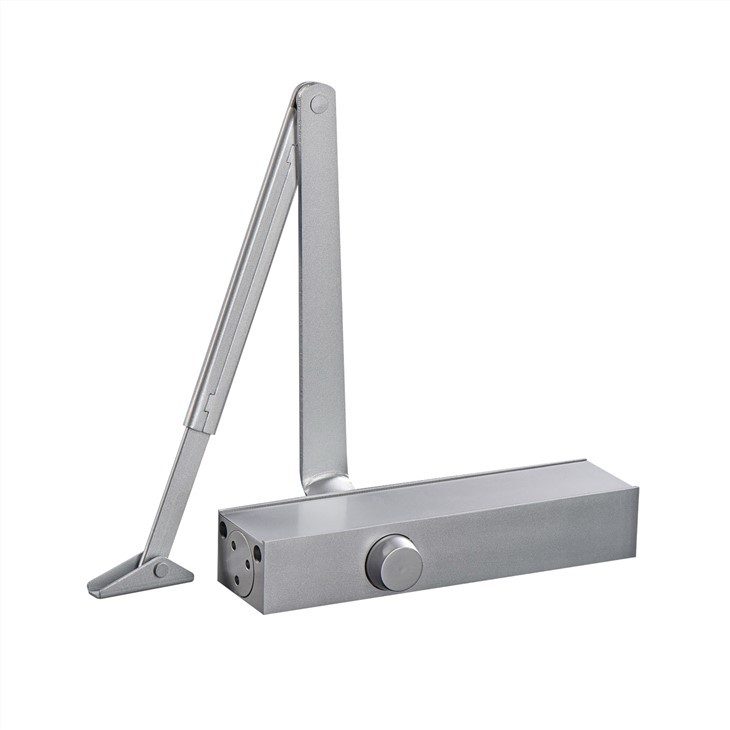
The door closer is a simple yet ingenious device that enables doors to close slowly and gently. By regulating the flow of hydraulic fluid or compressed air, these mechanisms provide safety, accessibility, energy efficiency, and noise reduction in various settings. Understanding the science behind door closers helps us appreciate their role in making our daily lives safer, more convenient, and efficient.